Choosing the Best Airbrush for Models: Gravity vs Siphon vs Side-Feed
Finding the best airbrush for models is one of the most important steps toward achieving a flawless, professional finish on your scale models. Whether you’re painting cars, aircraft, miniatures, or Gundam kits, the quality and type of airbrush you use directly affect paint flow, precision, and overall results.
However, with so many airbrush types available — including gravity feed, siphon feed, and side feed models — many hobbyists and professionals struggle to decide which design fits their painting needs best.
As a professional airbrush manufacturer, we’ve tested and refined every feed system to meet the needs of model painters worldwide. In this article, we’ll help you understand how each airbrush type works, compare their advantages and limitations, and guide you to choose the best airbrush for models based on your skill level, project size, and workflow.
Understanding How Airbrush Feed Systems Work
The feed system determines how paint moves from the cup or bottle to the nozzle. It affects air pressure, atomization, and even your line control.
Gravity Feed: Paint flows downward from a cup on top of the airbrush, assisted by gravity.
Siphon Feed: Paint is drawn upward from a bottle underneath the airbrush through suction.
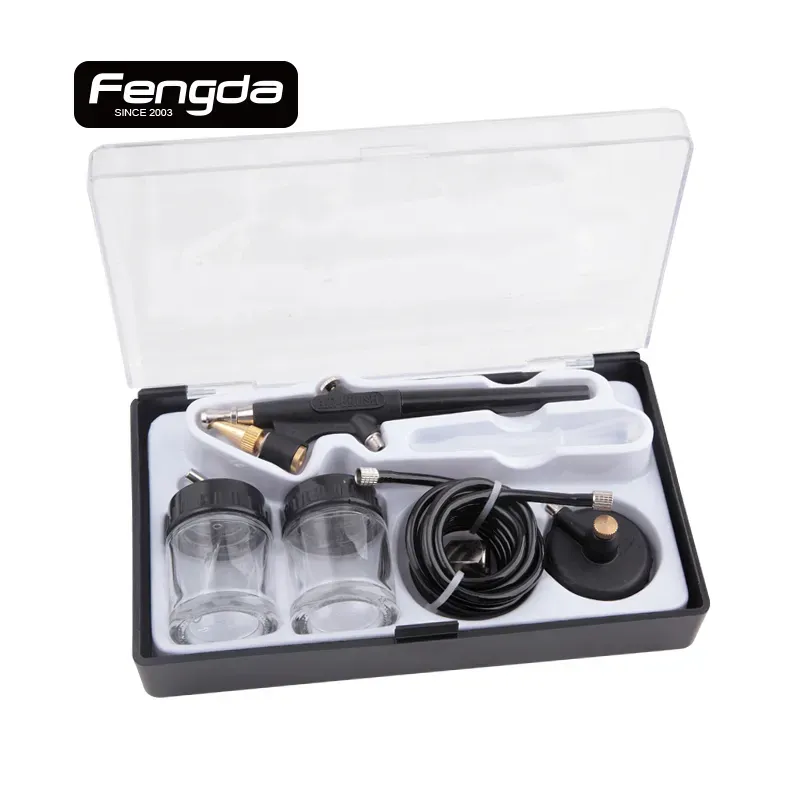
Side Feed: The paint cup is attached to the side, allowing for flexible positioning and balance.
Each system can produce excellent results when properly matched with the right compressor pressure and paint viscosity. The choice mainly depends on your project size, paint type, and level of detail required.
Gravity Feed Airbrush – Precision and Efficiency
Gravity feed airbrushes are the top choice among modelers who demand accuracy. Because the paint flows naturally into the nozzle, they require lower air pressure, offering better control for detailed work.
Extremely fine control for shading and camouflage patterns.
Works efficiently with less paint and air pressure.
Easy to clean and maintain.
Drawbacks:
Small paint cup limits large-area spraying.
Best For:
Miniatures, model cars, aircraft detailing, and precision shading.
Manufacturer’s Insight:
For fine-scale work, use a 0.2–0.35 mm nozzle paired with a low-noise compressor. This combination ensures smooth atomization and minimal overspray.
Siphon Feed Airbrush – Capacity and Versatility
Siphon feed airbrushes use air pressure to pull paint from a bottom-mounted bottle. This system offers excellent paint capacity, making it ideal for larger projects or batch production.
Large paint bottles for extended spraying sessions.
Quick color changes with interchangeable bottles.
Suitable for heavy or thicker paints.
Drawbacks:
Requires higher air pressure for consistent suction.
Slightly more time needed for cleaning.
Best For:
Large dioramas, base coats, industrial modeling, or professional studios.
Manufacturer’s Tip:
Use a compressor with at least 1/6 HP for stable airflow and consistent performance. Always clean the siphon tube and bottle after use to prevent clogging.
Side Feed Airbrush – Balance and Flexibility
The side feed airbrush offers the best of both worlds — excellent visibility and flexible operation. The paint cup can be rotated for left- or right-handed use, making it a favorite for experienced painters.
Advantages:
Clear line of sight for detailed work.
Balanced weight for long sessions.
Adjustable cup position for multi-angle spraying.
Drawbacks:
Slightly more complex design requires regular maintenance.
Best For:
Advanced modelers, artists, and custom painters who work with intricate designs or 3D surfaces.
Expert Insight:
Side feed models are perfect for professional studios where ergonomics and flexibility matter. They also help reduce fatigue during extended use.
Best Airbrush for Models Comparison Table
Feature
Gravity Feed
Siphon Feed
Side Feed
Paint Capacity
Small
Large
Medium
Air Pressure Needed
Low
High
Medium
Detail Level
High
Moderate
High
Cleaning Ease
Easy
Moderate
Moderate
Ideal Use
Fine detail, miniatures
Large models, base coats
Multi-angle, advanced work
How to Choose the Right Airbrush for Models
When choosing the best airbrush for models, consider these four key factors:
Model Size: Smaller models need finer control (gravity feed), while larger projects benefit from higher capacity (siphon feed).
Usage Frequency: Hobby users can start with a compact gravity feed; professional studios often prefer siphon or side feed designs.
Paint Type: Acrylics work well with all systems, but thicker enamels may perform better with siphon feeds.
Compressor Compatibility: Match the airbrush’s pressure needs with a stable, adjustable compressor.
A good rule of thumb:
Beginners → Gravity Feed
Intermediate → Siphon Feed
Advanced/Professional → Side Feed
Conclusion
Each airbrush type — gravity, siphon, or side feed — offers unique strengths for different modeling needs. If precision and fine detail are your goals, go with gravity feed. If you work on large-scale projects, siphon feed is your best choice. For flexibility and comfort, side feed delivers professional balance and control.
At Fengda, we design and manufacture airbrushes tailored for modelers, artists, and professionals who demand performance, reliability, and innovation.